

By the modern-pterosaur cryptozoologist Jonathan Whitcomb
Earlier in July of 2018, I noticed a long critical comment on the Youtube video “Ropen pterodactyl American eyewitness.” Before I reply to parts of that comment, let me make clear the following: I have no desire to imply any dishonesty or evil intention on his part, and he does not appear to have any such opinion of me. He included the following, near the end:
“Mr Whitcomb if you are reading this, this is not a hate comment on you. You may be a very good person and everyone is aloud [sic] to believe whatever they want, but because you have some very heavy bias and very questionable evidence to back up your claims on the existence of this creature. . .”
Here are three things related to the skeptic’s overall comment, which is too long to quote completely here:
- It had many errors, some obvious but others that could lead some readers away from the truth
- It was much too long to adequately address well on that Youtube page
- It was so likely to mislead people, in so many ways, that I deleted it from that Youtube page
I also felt, however, that those visiting this Youtube page should know what criticisms have been made against living-pterosaur investigations, so I added two comments related to what was deleted (not quoted here).
Problem #1 with the criticism
“The critic said, “. . . bioluminecents [sic] has never been seen in anything other than marine animals.”
This may be the most obvious error. Many marine organisms are bioluminescent, of course, yet we have the firefly and the glow worm, which also have bioluminescence but are obviously not living in any ocean. The Youtube video does not cover any concepts about bioluminescence in modern pterosaurs, so perhaps this critic has read something else or saw something about it in one of the comments.
This careless statement about bioluminescence might suggests the critic may be careless or less informed in other ways, so let’s look into other declarations he has made, yet we should keep an open mind about his other words.
Problem #2 with the criticism
At the beginning, he made another statement related to bioluminescence: “glow in the dark pterosaur.” I’ll take that to mean he has seen something other than this Youtube video, perhaps one of my online writings or something by a critic of my work or of that of one of my associates. Unfortunately, he gives no details. Let’s look at the second problem:
“. . . all the eyewitnesses describe outdated and inaccurate reconstructions of pterosaurs.”
This appears to me to be a greatly flawed statement, with not even one eyewitness description given. Notice the following that he does mention:
- skinny and leathery
- pointed wing tips
- walk on two legs
I have examined hundreds of eyewitness reports over the past fifteen years, interviewing eyewitnesses from around the world and receiving first-hand accounts from five continents. Perhaps few persons, if any, have been given more first-hand reports of sightings of apparent pterosaurs than I have. I believe I’ve written more books on this subject than any other nonfiction author in history. I daresay no other scientist has written more scientific papers about this than I have, especially if you count the comments that I have made about others’ papers on this. The point is this: Of those hundreds of eyewitness reports, I doubt that even one of them has all three of the points made by this critic. Perhaps there may be one that has (my memory is not perfect), but where did the critic get those ideas? Did they just pop into his imagination or did he read some criticism that another person published online?
Some eyewitnesses describe a flying creature with a word or two that relates to “skinny,” but why should any modern pterosaur be fat? The critic gives no details on why he believes as he does.
Many sighting reports include the word “leathery” (or “leather”), although it’s probably well below 50% of the overall reports. What’s wrong with that word? I suspect the critic has been overly influenced by one or more other critics who have grossly misunderstood the implications of the word. I see not the slightest reason why eyewitnesses should not use the word “leathery” when they have seen an actual modern pterosaur.
Since the critic gives no details about why he makes such broad statements about eyewitness reports, I dismiss this part of his statement and move on.
Problem #3 with the criticism
” . . . the long tail of Rhamphorhynchus, and one eyewitness described it to be Sordes, and all of these pterosaurs were very famous.”
I’ll stick to the subject of modern sightings of flying creatures that may relate, in some way, to fossils of the Sordes pilosus, for that is a Rhamphorhynchoid pterosaur. Where in the world does this critic get the idea that this kind of pterosaur has been “very famous?” Mention “Sordes” to fifty persons you meet walking the streets of any town or city in the United States, and you’ll likely find that not even one of them knows that it refers to any flying creature, let alone to a pterosaur. Let’s look deeper.
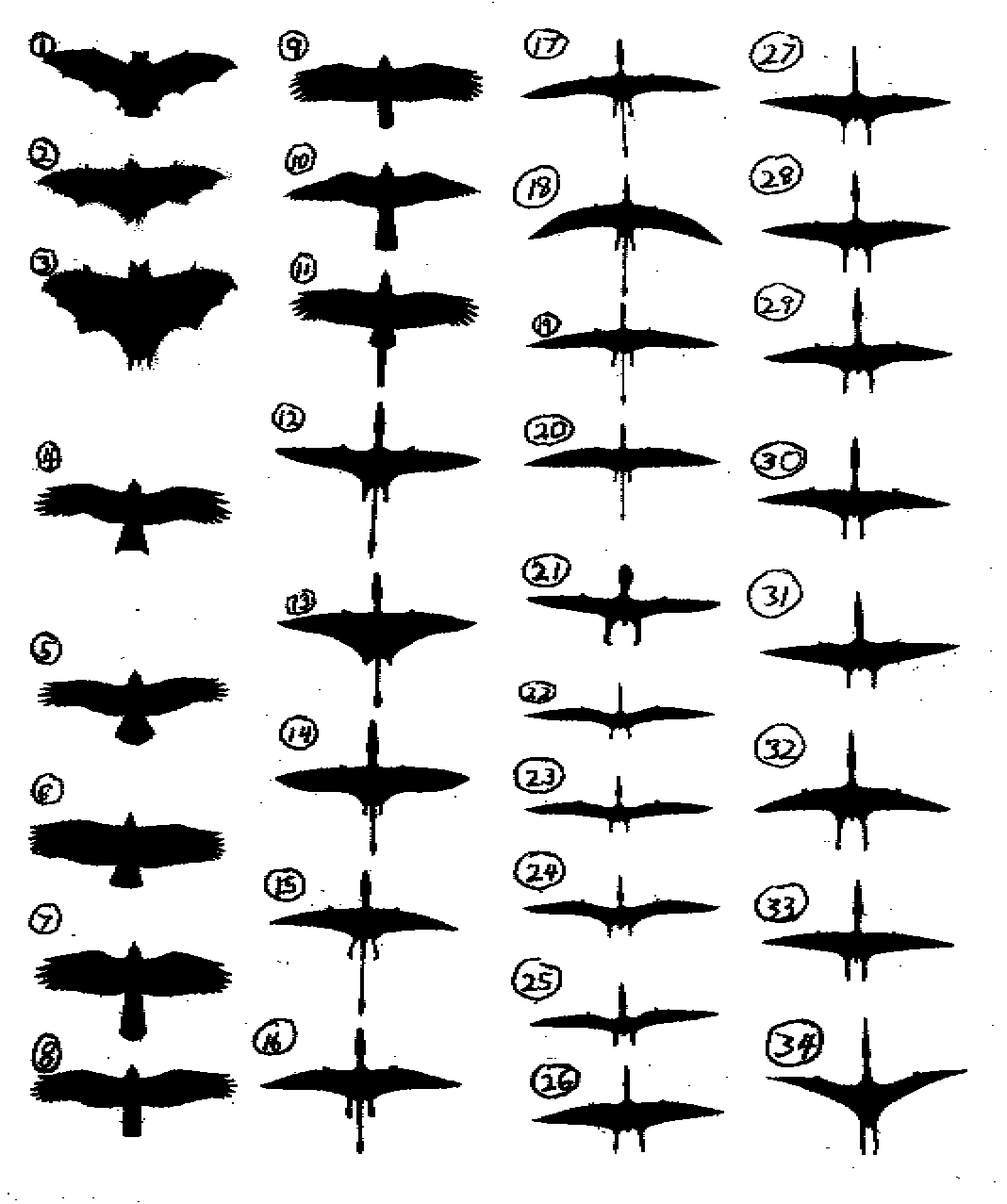
To the best of my knowledge, the best-known reports of a possible living pterosaur that related to the shape of a Sordes are of the sightings by Jonah Jim and Jonathan Ragu, both of whom are natives of Umboi Island, Papua New Guinea. Those two sightings were at different times and different places on that tropical island. From my experience interviewing natives of Umboi, neither of those two natives likely had any knowledge of the Sordes before they were shown dozens of silhouette images of birds, bats, and pterosaurs, in the year 2004. That was a few weeks after my expedition there, when two other Americans interviewed native eyewitnesses. Both natives independently chose the Sordes pilosus silhouette as being most like the shape of the “ropen” that they observed.
In other words, I see no truth to the statement that the Sordes pilosus has ever been “famous.”
Problem #4 with the criticism
“One of the biggest problems is the long tail in the ropen. It would create a lot of drag while it is flying and waste a ton of energy.”
I’ve noticed many serious faults with the critical comment that was posted on the Youtube page. Since the above portion includes “one of the biggest problems,” I tackle it. “Waste a ton of energy” does not appear to be a scientific statement. How would such drag take place? How would this critic explain the many fossils that have been discovered of pterosaurs with long tails? The critic gives no details.
I suggest he try to be open minded and look at what eyewitness actually say and what scientists actually say, about these wonderful flying creatures.
###
.
The following two eyewitness reports may have limited relevance to strange missing-persons cases in North America, yet the potential danger of attacks from related flying creatures makes them worthy of note.
.
Glowing pterosaurs in Papua New Guinea
A physicist, who examined video footage of two strange lights that explorers think are bioluminescent pterosaurs, declares that the glow is not from meteors, lanterns, campfires or an airplane.
.
“A short account of a particular incident”—that is one definition of “anecdote.” But the connotation includes more than “short,” for “anecdote” is the word more appropriate when an event is witnessed by only one or a few and the report is second hand at best. Regarding eyewitness accounts of living pterosaurs, I have found that “anecdote” has been eliminated as a valid word for some of the reports.
.
Today, one in eight of the world’s 10,000 bird species are threatened with extinction, of which more than 200 are categorised as Critically Endangered
.
A number of scientists have tried to know and understand Marfa Lights: observing, testing photographing, and theorizing. Interesting ideas have emerged; none but one, however, seems to come close to adequately explaining the apparent intellegence associated with those flying lights, the mystery lights of Marfa, Texas: a modern pterosaur.
.
Modern pterosaurs and Jonathan Whitcomb
Why would a young man in Sudan, Africa, who had recently gained his first access to a computer, send an email to the American Jonathan Whitcomb? . . .
.
Marfa Lights and flying creatures
The more I examine evidences gathered by a scientist, the more obvious it becomes to me: Many of the mysterious lights around Marfa, Texas, are the bioluminescent glow of flying predators, perhaps related to the nocturnal ropen of Papua New Guinea.