

By Jonathan Whitcomb of Animal Discovery
A particular modern pterosaur has now been tied to chicken loses in both central Utah and in Nevada. Earlier in October of 2021 I gave it the name “Draper Ropen”, and it was last seen in a rural neighborhood of Nevada on October 2, 2021. It has also been killing barn cats in that same farming community. Most Americans would call this kind of flying creature “pterodactyl”, although it was called “dragon” in earlier human history.
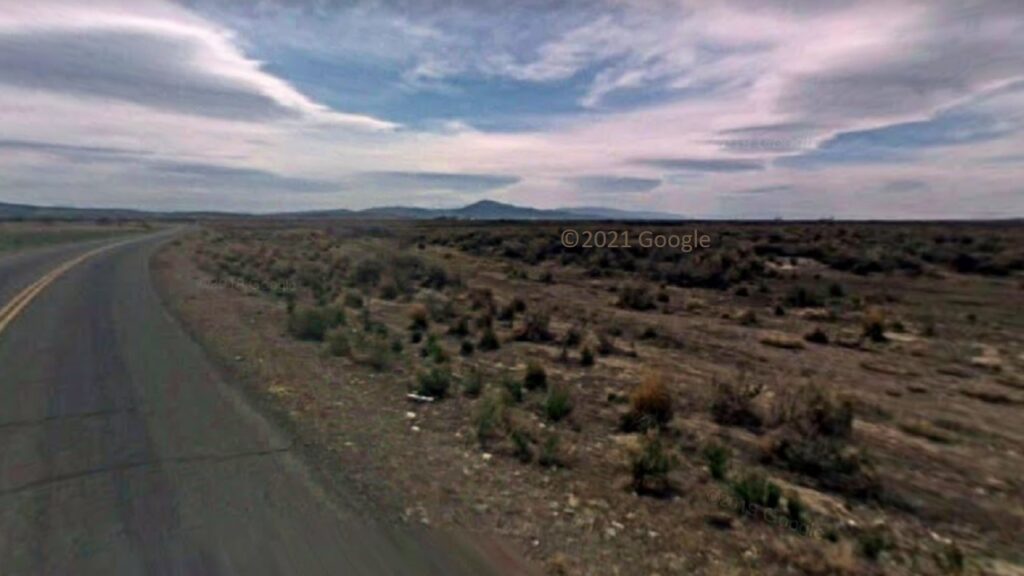
A remote desert area of Nevada (not necessarily the area where the “Draper Ropen” was observed)
.
In the Words of the Eyewitness in Nevada
From an email sent to Jonathan Whitcomb:
By happenstance I found you after something amazing tonight. . . . Approximately 9:20 pm Saturday, 02 October, 2021 (tonight), I experienced something unusual (even unusual for this rural area in . . . Nevada).
While . . . in the garage, I heard something very heavy land on the tin roof . . . It landed softly, and after the roof rafters creaked, then I heard claws scratch the roof . . . Over the past few weeks, many of my neighbor’s barn cats disappeared. . . . Something at night has been eating her cats. Every few nights I hear a cat screaming its last breath trying to fend off something, which kills it very quickly. Marks of struggle are seen, but no footprints [animal tracks].
At first, I thought it might be coyotes or a ranch dog loose at night. But, when I realized I haven’t heard or seen coyotes for quite a while now (very unusual). And when she asked me to look around for tracks, I found no coyote tracks or dog tracks, or tracks of any kind. Only tracks of her barn cat tracks and some chickadee and quail tracks. . . .
Synchronous with the one neighbor’s cats disappearing (only at night), my neighbor to the south has been losing chickens (also, something killing them only at night) His chickens aren’t eaten but squished with no tracks nearby the dead chicken or near the fenced chicken run to reveal the predator. Very unusual, because the only thing that could do this must fly… but, nothing is known to fly in this area big enough to do this (not even eagles and great horned owls are big enough to crush a chicken . . .
Eyewitness Account Continued: The Encounter
Tonight, when this heavy, big “bird” creature landed on the garage roof, the neighbor’s dogs (to the north) went ballistic with frenzied barking that they make only when afraid. Quickly, I turned off the lights. And, quietly, and very carefully I opened the door and went outside. . . .
The garage’s roofline measures 26 ft wide. This creature’s wingspan spread wider by about 2 feet on each side and its wingtip flapped within about 4 feet of my head as I opened the door. . . . moment). I saw the silhouette clearly, because it blacked out the stars. The wingtip didn’t look like feathers, but it looked very much like a gigantic bat’s wing. From almost immediately underneath (at the closest point during its takeoff, it had a long narrow tail longer than its head to base of tail length.
In the Words of Jonathan Whitcomb, executive director of Animal Discovery
I soon received two more emails from this eyewitness in Nevada and was struck by the similar accounts from people in Draper, Utah. There a teenager heard a cat screech in the neighbor’s back yard but the screech was suddenly cut off, as if a predator had quickly killed the cat.
I also remembered another person that I had spoken with (face-to-face) in Draper: a man who used to have chickens next to his house. He lives just two doors away from the backyard where a cat was heard to screech before it was cut off. Those chickens in central Utah were also killed and in the same way: not eaten or carried away but squished as if something or someone heavy had stepped on them.
If all that were not enough, the ropen seen in Draper (in 2018) was nearly 30 feet in wingspan, and the one seen by the man at night in Nevada on October 2, 2021—that ropen had a wingspan of 30 feet, which estimate was made by taking the width of the garage roof (26 feet) and adding two feet for each side of that roof, where the wings went further than the ends of the roof. It seems reasonable to me that this ropen grew at least a little during those three years in which it traveled from central Utah to Nevada.
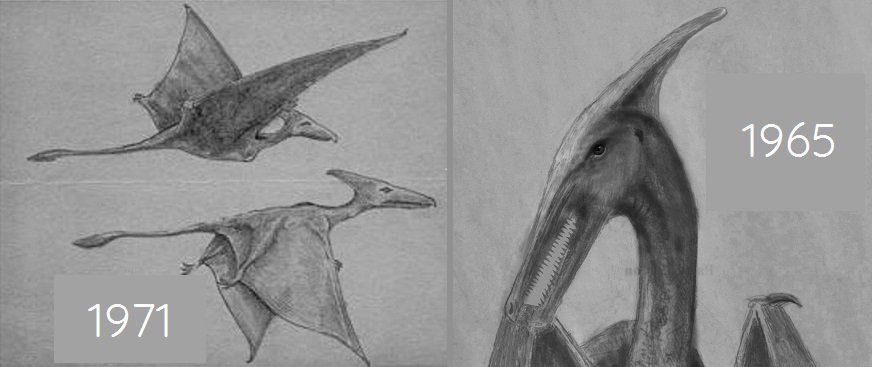
The Draper Ropen may be related to the American Hammerhead ropen that was seen in eastern Cuba in the mid-20th century; perhaps it is the same species. This flying creature may live in many areas of North America.
###
.
Draper ropen in Nevada and Utah
How do I know that a ropen with a thirty-foot wingspan, now hunting house cats and killing chickens in Nevada, is the same animal seen in Draper, Utah, a few years ago? The one in Utah was about that size, or a bit smaller, and was there hunting house cats and killing chickens.
.
Apparent ropen seen in Grantsville, Utah
Three boys were playing at night on a playground in the farming community of Grantsville, Utah, around the fall of 2001, when they were shocked at the appearance of a large glowing creature that flew overhead.
.
Resources on Modern Pterosaurs
The following are blogs devoted primarily to the subject of extant (still living) pterosaurs, commonly called by non-scientists “pterodactyls,” and a few examples of posts published on those blogs.
.
Jonathan Whitcomb, author of nonfiction cryptozoology books, has suggested that flying creatures reported in Raleigh, North Carolina, over several years, may be related to what Americans in other states have reported to him over the past fourteen years.
.
“Hi, Jonathan [Whitcomb]. Thank you so much for writing back to me … I do appreciate it. I live in a small town in northeast Georgia, called Winder . . .”
This eyewitness described to Whitcomb the large “pterodactyl” she observed fly in front of her car one morning in a rural area of Georgia.
.
Two video trailers feature overviews of “Pterodactyl Caught on Camera – Part 2” and “Giant Pterodactyl in California” two out of over 100 videos on modern pterosaurs on this Youtube channel “Protect Animal Life”.
.
Over the past 18 years, I’ve seen a number of questions related to the possibility that people who report seeing living pterosaurs have actually seen that kind of flying creature.
.
The largest nonfiction book on pterodactyl sightings world wide, Searching for Ropens and Finding God is the #1 reference book on these shocking flying creatures and contains fascinating eyewitness accounts and adventures.
.
Report a pterodactyl encounter or sighting
contact form to get into email communication
.
Giant bat-like flying creature
To me, more weird than unidentified bat-like creatures in the United States is the idea that “the evolution of feathers could have taken place in a species that was the ancestor of pterosaurs and dinosaurs.” I don’t believe that . . .
.